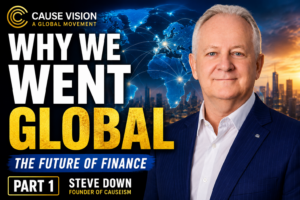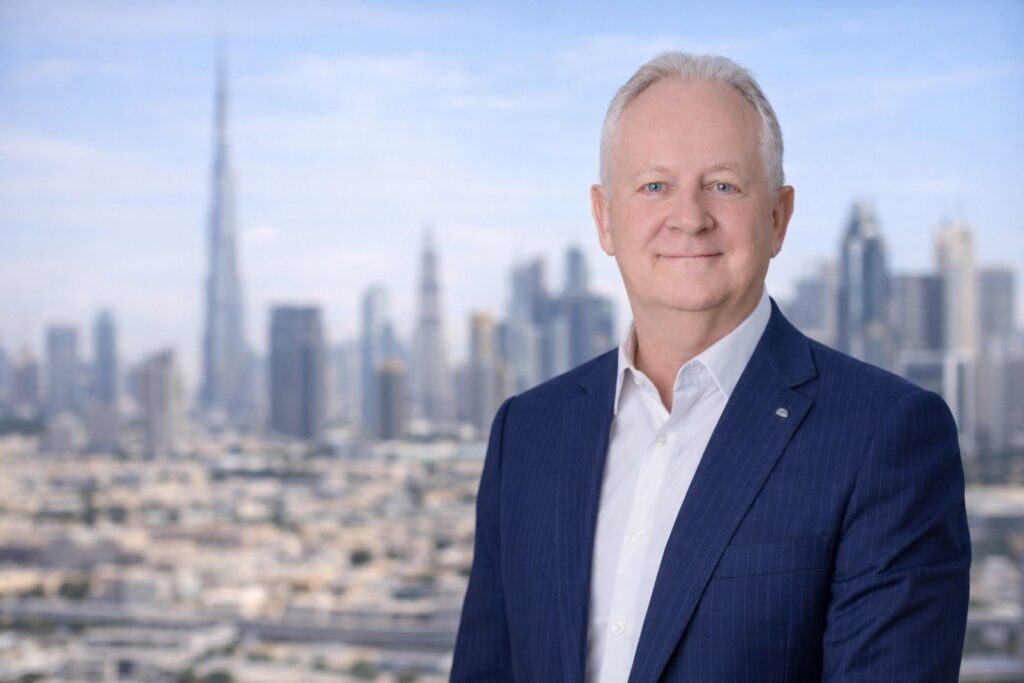

The world is changing faster than most people realize. We are living through one of the greatest economic transformations in modern history, yet many still view finance, business, and opportunity through systems that were built for a completely different era. In Part 2 of this conversation, Steve Down explores why the future of finance will not be confined by borders, controlled by institutions, or limited to a privileged few. Instead, he believes the future belongs to individuals empowered by blockchain technology, artificial intelligence, and a new economic philosophy called Causeism.
According to Steve, blockchain represents a shift that cannot be stopped. Much like the rise of the internet, it is fundamentally changing how people exchange value around the world. Traditional financial systems were built around centralized control, where banks and institutions acted as gatekeepers to opportunity. But blockchain changes that dynamic by allowing individuals to participate directly in a global economy without relying on traditional intermediaries. Steve describes this moment as revolutionary because it places financial power back into the hands of people rather than institutions.
This shift is one of the primary reasons Cause Vision was designed with an international focus from the beginning. Steve explains that blockchain knows no borders, which means a modern financial ecosystem cannot be built with a local-only mindset. Cause Vision is intended to operate globally because the problems it seeks to solve are global in nature. Unequal access to banking, poverty, food insecurity, and lack of healthcare are not isolated issues affecting one nation alone. They exist on every continent, and Steve believes the solutions must be scalable enough to reach people everywhere.
At the center of this vision is Causeism, which Steve describes as a new economic philosophy built on integrating giving directly into commerce. Rather than treating philanthropy as something separate from business, Causeism embeds impact into every transaction. Steve explains that every purchase or financial exchange has the potential to generate both economic and social value simultaneously. In practical terms, this means consumers can support nonprofit organizations automatically through everyday spending. The model is designed to create sustainable giving rather than relying solely on donations or temporary fundraising efforts.
Steve believes this model has the potential to fundamentally reshape how people think about capitalism, wealth creation, and social responsibility. Instead of transactions existing purely for personal gain, they become opportunities to improve lives around the world. He argues that the traditional divide between profit and compassion is unnecessary and outdated. In his view, business can remain profitable while simultaneously serving humanity on a large scale.
One of the strongest themes throughout the interview is empowerment. Steve repeatedly emphasizes that the future economy should benefit ordinary people rather than concentrating power among governments, banks, or billionaires. He envisions a future where individuals have greater control over their finances, greater access to opportunity, and greater ability to contribute to meaningful causes through systems that are transparent and globally connected. Cause Vision, in his eyes, is not simply a financial technology company. It is infrastructure for a more inclusive global economy.
Steve also speaks passionately about the importance of thinking globally. After living and working internationally, he says his perspective changed dramatically. He realized how easy it is for people to become focused solely on their local environment while overlooking the enormous opportunities and challenges that exist across the rest of the world. He believes global thinking expands not only business opportunities, but also human understanding. By connecting different nations, cultures, and economic realities, people begin to recognize both the scale of global problems and the possibilities for solving them together.
Throughout the interview, Steve points to real-world examples that continue to shape his mission. He discusses efforts connected to nonprofit initiatives in Africa, including healthcare and children’s hospital projects intended to address devastating infant mortality rates and lack of access to medical care. For Steve, these are not abstract concepts or statistics. They are human realities that reinforce why a more compassionate economic system is necessary. Causeism, he argues, creates a model where solving these problems becomes sustainable because impact is continuously funded through commerce itself.
Another major idea Steve challenges is the belief in scarcity. He argues that the world has enough resources, enough opportunity, and enough abundance for everyone to live meaningful lives. In his view, many of the systems that dominate modern economies are built around fear, limitation, and competition. Causeism instead promotes abundance thinking — the belief that when people give, serve, and create value for others, everyone benefits. Steve repeatedly returns to the principle that “by giving, you receive,” describing it not just as a moral idea, but as an economic principle capable of transforming the world.
Underlying the entire conversation is a message of hope. Steve believes many people around the world are exhausted, discouraged, and disconnected from purpose. He sees Causeism as an alternative to the division, negativity, and hopelessness that dominate much of modern culture. Rather than asking people to choose between capitalism and socialism, Causeism proposes a different path — one where business, impact, and human compassion work together instead of against each other.
For Steve Down, this is more than a business strategy. It is a personal mission and a legacy he hopes to leave for future generations. His belief is simple: the future of finance should not only be digital and global — it should also be purposeful. And the people who recognize that shift early will help shape what comes next.